
4-Methyl-2-nitroaniline
Synonym(s):2-Nitro-p-toluidine;4-Amino-3-nitrotoluene
- CAS NO.:89-62-3
- Empirical Formula: C7H8N2O2
- Molecular Weight: 152.15
- MDL number: MFCD00007907
- EINECS: 201-924-9
- SAFETY DATA SHEET (SDS)
- Update Date: 2025-01-27 09:38:02
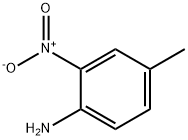
What is 4-Methyl-2-nitroaniline?
Chemical properties
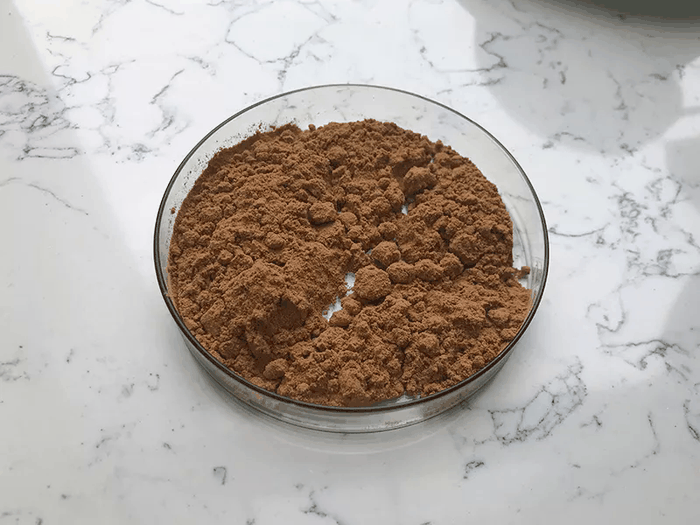
orange to orange-brown fine crystalline powder
The Uses of 4-Methyl-2-nitroaniline
4-Methyl-2-nitroaniline is used as a red azo dye.
Definition
ChEBI: A C-nitro compound in which the nitro compound is ortho to the amino group and meta to the methyl group of p-toluidine.
Preparation
4-Methyl-2-nitrobenzenamine in oblate sulfuric acid and saponification.
Production Methods
N-Acetyl-p-toluidine is nitrated with mixed acid, and the quenched reaction mixture is heated and hydrolyzed to 3-nitro-p-toluidine.
General Description
Red crystals or bright orange powder.
Air & Water Reactions
Insoluble in water.
Reactivity Profile
4-Methyl-2-nitroaniline is incompatible with acids, acid chlorides, acid anhydrides, chloroformates, and strong oxidizers .
Fire Hazard
4-Methyl-2-nitroaniline is combustible.
Flammability and Explosibility
Non flammable
Properties of 4-Methyl-2-nitroaniline
| Melting point: | 115-116 °C (lit.) |
| Boiling point: | 169°C (21 mmHg) |
| Density | 1,164 g/cm3 |
| vapor pressure | 0.06Pa at 25℃ |
| refractive index | 1.6276 (estimate) |
| Flash point: | 157°C |
| storage temp. | −20°C |
| solubility | 0.2g/l |
| form | Fine Crystalline Powder |
| pka | 0.46±0.10(Predicted) |
| Colour Index | 37110 |
| color | Orange to orange-brown |
| Water Solubility | Soluble in water (0.2 g/L at 20°C). |
| BRN | 879506 |
| CAS DataBase Reference | 89-62-3(CAS DataBase Reference) |
| NIST Chemistry Reference | 3-Nitro-4-aminotoluene(89-62-3) |
| EPA Substance Registry System | 4-Methyl-2-nitroaniline (89-62-3) |
Safety information for 4-Methyl-2-nitroaniline
| Signal word | Danger |
| Pictogram(s) |
 Skull and Crossbones Acute Toxicity GHS06  Health Hazard GHS08  Environment GHS09 |
| GHS Hazard Statements |
H373:Specific target organ toxicity, repeated exposure H411:Hazardous to the aquatic environment, long-term hazard |
| Precautionary Statement Codes |
P273:Avoid release to the environment. P280:Wear protective gloves/protective clothing/eye protection/face protection. P314:Get medical advice/attention if you feel unwell. |
Computed Descriptors for 4-Methyl-2-nitroaniline
4-Methyl-2-nitroaniline manufacturer
JSK Chemicals
3Y
Phone:+91-9879767984
Whatsapp: +91-9879767970
product: 4-Methyl-2-nitroaniline, 98% 99%
ASM Organics
Andhra Pradesh
Phone:91-9866122393
Whatsapp: 91-9866122393
product: 4-Methyl-2-nitroaniline
New Products
Indole Methyl Resin tert-butyl 9-methoxy-3-azaspiro[5.5]undecane-3-carboxylate Boc-His(Boc)-OH 2-CTC Resin 4-Chloro-7-tosy1-7Hpyrrolo[2,3-d]pyrimidine 5,7-Dibromo-1H-indole 2,5-dichloro-N-hydroxy-4,6-dimethylpyridine-3-carboximidamide 2,2-Dimethoxy-7-azaspiro[3.5]nonane hydrochloride 4-chloromethyl-5-methyl-1,3-dioxol-2-one (DMDO-Cl) R-2-BENZYLOXY PROPIONIC ACID 1,1’-CARBONYLDIIMIDAZOLE 1,1’-CARBONYLDI (1,2-4 TRIAZOLE) N-METHYL INDAZOLE-3-CARBOXYLIC ACID 4-((2-hydroxyethyl)thio)benzoic acid 1-(TERT-BUTOXYCARBONYL)-2-PYRROLIDINONE Methyl 6-methylnicotinate 3-Pyridineacrylic acid tert-Butyl carbazate TETRAHYDRO-2H-PYRAN-3-OL 2-((4-morpholinophenylamino) (methylthio) methylene) malononitrile 3-(4-morpholinophenylamino)-5-amino-1H-pyrazole-4-carbonitrile 2,4-dihydroxybenzaldehyde 1,3-Diethyl-1,3-Diphenylurea Methyl 2-methylquinoline-6-carboxylateRelated products of tetrahydrofuran
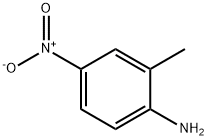
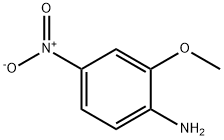
You may like
-
 4-Methyl-2-nitroaniline 98%View Details
89-62-3 -
 4-Methyl-2-nitroaniline 99%View Details
89-62-3 -
4-Methyl-2-nitroaniline CAS 89-62-3View Details
89-62-3 -
4-Methyl-2-nitroaniline CAS 89-62-3View Details
89-62-3 -
 4-Amino-3-NitrotolueneView Details
89-62-3 -
 4 Methyl 2 NitroanilineView Details
13852-51-2 -
 4 Amino 3 NitrotolueneView Details
611-05-2 -
4-Methyl-2-nitroaniline 98%View Details
89-62-3
Statement: All products displayed on this website are only used for non medical purposes such as industrial applications or scientific research, and cannot be used for clinical diagnosis or treatment of humans or animals. They are not medicinal or edible.