
3,4-Ethylenedioxythiophene
Synonym(s):2,3-Dihydrothieno[3,4-b]-1,4-dioxin;EDOT
- CAS NO.:126213-50-1
- Empirical Formula: C6H6O2S
- Molecular Weight: 142.18
- MDL number: MFCD02093622
- EINECS: 415-450-7
- SAFETY DATA SHEET (SDS)
- Update Date: 2025-09-25 17:15:13
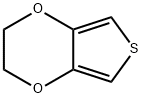
What is 3,4-Ethylenedioxythiophene?
Chemical properties
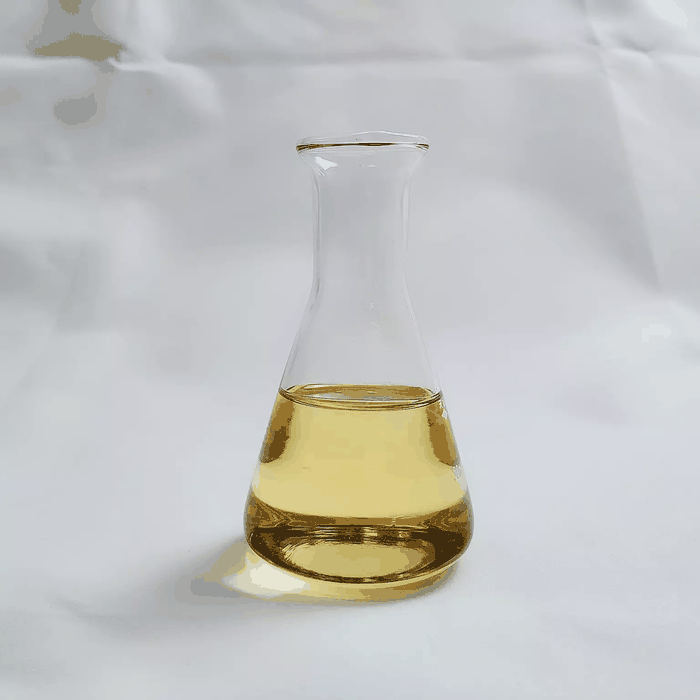
Light yellow liquid
The Uses of 3,4-Ethylenedioxythiophene
3,4-Ethylenedioxythiophene is used as a monomer to synthesize the conductive polymers and used as a reductant in the one-pot synthesis of gold nanoparticles from chloroauric acid, as starting material used in palladium-catalyzed mono and bis-arylation reactions and in the synthesis of conjugated polymers and copolymers, with potential optical applications. It is also used in redox activity, electroactivity and conductivity.
What are the applications of Application
3,4-Ethylenedioxythiophene is a monomer used to synthesize the conductive polymer PEDT
General Description
3,4-Ethylenedioxythiophene (EDOT) is an electro-active conductive monomer with a thiol group that combines an electron donor and electron acceptor in a donor-acceptor-donor arrangement.
Properties of 3,4-Ethylenedioxythiophene
| Melting point: | 10 °C |
| Boiling point: | 193 °C (lit.) |
| Density | 1.331 g/mL at 25 °C (lit.) |
| vapor pressure | 11.9Pa at 25℃ |
| refractive index | n |
| Flash point: | 230 °F |
| storage temp. | 2-8°C |
| form | clear liquid |
| color | Colorless to Yellow |
| Water Solubility | Immsicible with water. Miscible with alcohol and ether. |
| CAS DataBase Reference | 126213-50-1(CAS DataBase Reference) |
| EPA Substance Registry System | Thieno[3,4-b]-1,4-dioxin, 2,3-dihydro- (126213-50-1) |
Safety information for 3,4-Ethylenedioxythiophene
| Signal word | Danger |
| Pictogram(s) |
 Skull and Crossbones Acute Toxicity GHS06 |
| GHS Hazard Statements |
H302:Acute toxicity,oral H311:Acute toxicity,dermal H319:Serious eye damage/eye irritation |
| Precautionary Statement Codes |
P264:Wash hands thoroughly after handling. P264:Wash skin thouroughly after handling. P270:Do not eat, drink or smoke when using this product. P280:Wear protective gloves/protective clothing/eye protection/face protection. P301+P312:IF SWALLOWED: call a POISON CENTER or doctor/physician IF you feel unwell. P305+P351+P338:IF IN EYES: Rinse cautiously with water for several minutes. Remove contact lenses, if present and easy to do. Continuerinsing. |
Computed Descriptors for 3,4-Ethylenedioxythiophene
| InChIKey | GKWLILHTTGWKLQ-UHFFFAOYSA-N |
New Products
4,4-Difluoropiperidine hydrochloride tert-butyl 9-methoxy-3-azaspiro[5.5]undecane-3-carboxylate Indole Methyl Resin N-Isopropylurea N,N-Dicyclohexylcarbodiimide(DCC) MELDRUMS ACID 5-METHYLISOXAZOLE-4-CARBOXYLIC ACID Magnessium Bis glycinate Zinc ascorbate 1-bromo-2-butyne 2-acetamidophenol 9(10H)-anthracenone Erythrosin B, 4-Piperidinopiperidine 2-((4-morpholinophenylamino) (methylthio) methylene) malononitrile 2,4-dihydroxybenzaldehyde 3-(4-morpholinophenylamino)-5-amino-1H-pyrazole-4-carbonitrile Methyl 2-methylquinoline-6-carboxylate 2,6-dichloro-4-nitropyridine 4-Bromo-2-chlorobenzonitrile 2-(benzylamino)acetic acid hydrochloride 4-(tert-Butoxycarbonylamino)but- 2-ynoic acid 3,4-dihydro-2H-benzo[b][1,4]dioxepine 1-Phenyl-1-cycloprppanecarboxylicacidRelated products of tetrahydrofuran



![2,3-DIHYDROTHIENO[3,4-B][1,4]DIOXINE-5-CARBALDEHYDE](https://img.chemicalbook.in/CAS/GIF/204905-77-1.gif)
You may like
-
 3,4-Ethylenedioxythiophene 98%View Details
 -
 3,4-Ethylenedioxythiophene 98%View Details
 -
 126213-50-1 3,4-Ethylenedioxythiophene 99%View Details
126213-50-1 -
 3,4-Ethylenedioxythiophene 98%View Details
126213-50-1 -
3,4-Ethylenedioxythiophene, 97% CAS 126213-50-1View Details
126213-50-1 -
3,4-Ethylenedioxythiophene CAS 126213-50-1View Details
126213-50-1 -
3,4-Ethylenedioxythiophene (EDOT) pure CAS 126213-50-1View Details
126213-50-1 -
3,4-Ethylenedioxythiophene CAS 126213-50-1View Details
126213-50-1
Statement: All products displayed on this website are only used for non medical purposes such as industrial applications or scientific research, and cannot be used for clinical diagnosis or treatment of humans or animals. They are not medicinal or edible.