
Eriochrome Black T
Synonym(s):Chrome black T, 2-Hydroxy-1-(1-hydroxy-2-naphthylazo)-6-nitronaphthalene-4-sulfonic acid sodium salt;Eriochrome black T (C.I. 14645);Mordant Black 11
- CAS NO.:1787-61-7
- Empirical Formula: C20H12N3NaO7S
- Molecular Weight: 461.38
- MDL number: MFCD00003935
- EINECS: 217-250-3
- SAFETY DATA SHEET (SDS)
- Update Date: 2025-01-27 09:38:02
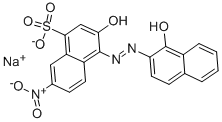
What is Eriochrome Black T?
Chemical properties
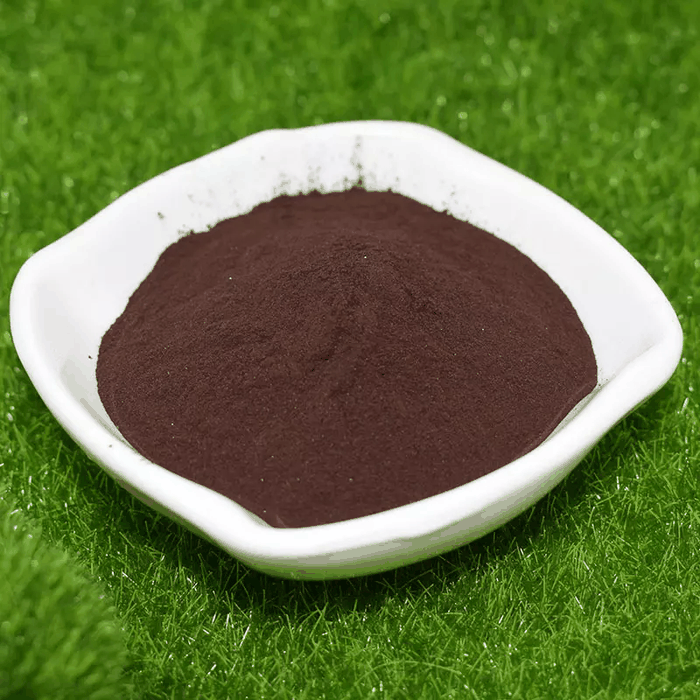
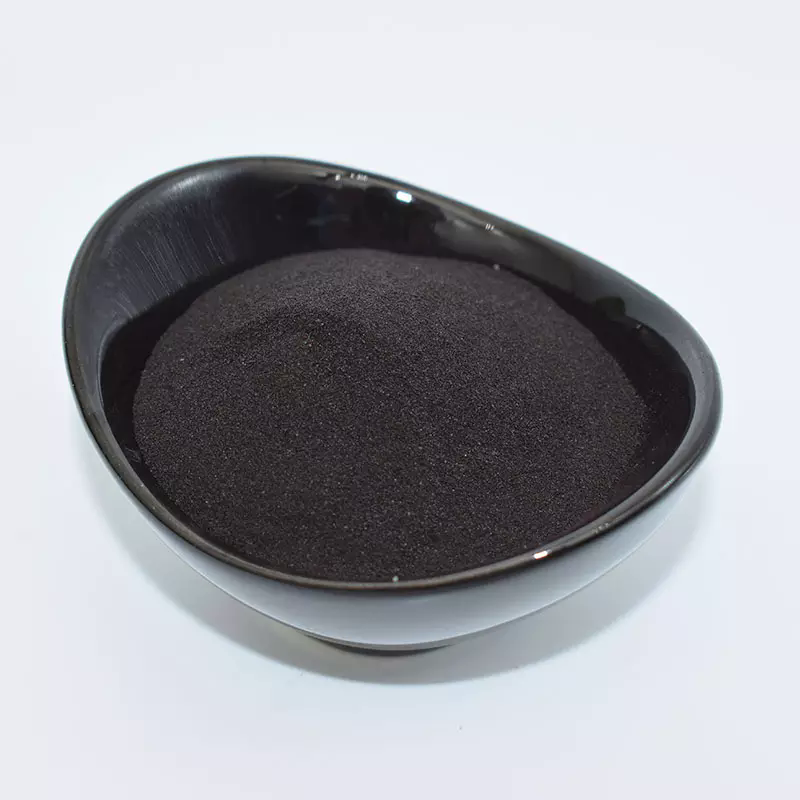
black powder
The Uses of Eriochrome Black T
Eriochrome black T is used as an indicator in analytical chemistry. It is also used in the detection of rare earth metals. It finds application in dyeing and printing of wool fabric, dyeing of silk and nylon as well as in leather dyeing. It can be used in the spectrophotometric determination of diphenhydramine hydrochloride in pharmaceutical preparations. As a complexometric indicator, it is useful in the determination of hardness of water.
The Uses of Eriochrome Black T
Eriochrome black T has been used to determine the concentration of Ca2+ using complexometric titration method.
Preparation
4-Amino-3-hydroxy-7-nitronaphthalene-1-sulfonic acid diazotization, and Naphthalen-1-ol?coupling.
General Description
Eriochrome black T is used as an indicator for complexometric titrations. It functions as an acid-base indicator. Eriochrome? Black T forms complex with Ca2+ and Mg2+, but it binds more strongly to Mg2+ ions.
Color change
The indicator Eriochrome Black T is bright blue in the absence of alkaline earths, but with them forms a deep-red complex that has a higher ionization constant than that of the Na2EDTA complex. Hence, with Eriochrome Black T as an indicator, the alkaline earth can be titrated with Na2EDTA.
Hazards
Eriochrome Black T causes serious eye irritation, it is Toxic to aquatic life with long lasting effects.
Purification Methods
The sodium salt (200g) is converted to the free acid by stirring with 500mL of 1.5M HCl, and, after several minutes, the slurry is filtered on a sintered-glass funnel. The process is repeated and the material is air dried after washing with acid. It is then extracted with *benzene for 12hours in a Soxhlet extractor, the *benzene solution is evaporated and the residue is air dried. A further desalting with 1.5M HCl (1L) is followed by crystallisation from dimethylformamide (in which it is very soluble) by forming a saturated solution at the boiling point, and allowing to cool slowly. The crystalline dimethylammonium salt so obtained is washed with *benzene and treated repeatedly with dilute HCl to give the insoluble free acid which, after air drying, is dissolved in alcohol, filtered and evaporated. The final material is air dried, then dried in a vacuum desiccator over Mg(ClO4)2. The purified acid is converted to the dimethylammonium salt with Me2NH. [Diehl & Lindstrom, Anal Chem 31 414 1959]. It is an indicator in the complexometry of alkaline earth metals. [Beilstein 16 IV 429.]
Properties and Applications
blue black. Dark brown powder. Soluble in water for bordeaux red to jam red, moderate soluble in ethanol for brown light magenta, slightly soluble in Acetone. Dye in concentrated sulfuric acid for skipper, dilution to pale red light brown; In concentrated nitric acid to orange. Dye aqueous solution to join concentrated hydrochloric acid for sauce red; Join strong caustic into brown light magenta. Mainly used for all kinds of wool fabric dyeing, also used for silk, nylon and wool and a variety of fiber blended fabric dyeing, can be in chrome pretreatment of wool fabric direct printing. Is tasted can be used for indicator, also can be used for biological and fur dyeing.
| Standard | Ironing Fastness | Light Fastness | Fulling | Persperation Fastness | Soaping | Water | |
| Alkali | Acid | ||||||
| ISO | 4-5 | 7 | 5 | 5 | 5 | 5 | 5 |
| AATCC | 4-5 | 7 | 4-5 | 5 | 5 | 5 | |
Properties of Eriochrome Black T
| Density | 1.109 g/mL at 25 °C |
| Flash point: | 185 °C |
| storage temp. | room temp |
| solubility | 50g/l |
| form | Powder/Solid |
| Colour Index | 14645 |
| pka | pK1:6.3;pK2:11.55 (25°C) |
| Specific Gravity | 1.109 |
| color | Brownish-black to black |
| Odor | Odorless |
| PH | 3.7 (10g/l, H2O, 20℃) |
| Water Solubility | 50 g/L (20 ºC) |
| Merck | 14,3667 |
| BRN | 4121162 |
| Stability: | Stable. Incompatible with strong oxidizing agents, strong reducing agents. |
| CAS DataBase Reference | 1787-61-7(CAS DataBase Reference) |
| EPA Substance Registry System | C.I. Mordant Black 11, monosodium salt (1787-61-7) |
Safety information for Eriochrome Black T
| Signal word | Danger |
| Pictogram(s) |
 Environment GHS09 |
| GHS Hazard Statements |
H411:Hazardous to the aquatic environment, long-term hazard |
| Precautionary Statement Codes |
P273:Avoid release to the environment. P391:Collect spillage. Hazardous to the aquatic environment P501:Dispose of contents/container to..… |
Computed Descriptors for Eriochrome Black T
Eriochrome Black T manufacturer
Innovative
New Products
4,4-Difluoropiperidine hydrochloride tert-butyl 9-methoxy-3-azaspiro[5.5]undecane-3-carboxylate Indole Methyl Resin N-Isopropylurea N,N-Dicyclohexylcarbodiimide(DCC) MELDRUMS ACID 5-METHYLISOXAZOLE-4-CARBOXYLIC ACID Magnessium Bis glycinate Zinc ascorbate 1-bromo-2-butyne 2-acetamidophenol 9(10H)-anthracenone Erythrosin B, 4-Piperidinopiperidine 2-((4-morpholinophenylamino) (methylthio) methylene) malononitrile 2,4-dihydroxybenzaldehyde 3-(4-morpholinophenylamino)-5-amino-1H-pyrazole-4-carbonitrile Methyl 2-methylquinoline-6-carboxylate 2,6-dichloro-4-nitropyridine 4-Bromo-2-chlorobenzonitrile 2-(benzylamino)acetic acid hydrochloride 4-(tert-Butoxycarbonylamino)but- 2-ynoic acid 3,4-dihydro-2H-benzo[b][1,4]dioxepine 1-Phenyl-1-cycloprppanecarboxylicacidRelated products of tetrahydrofuran

You may like
-
 1787 -61 -7 Erichrome Black T 98%View Details
1787 -61 -7 -
 Erichrome black-T (EBT) indicator powder 98%View Details
1787-61-7 -
Mordant black 11 99%View Details
-
 Mordant black 11 98%View Details
1787-61-7 -
 Eriochrome Black-T CAS 1787-61-7View Details
1787-61-7 -
Mordant black 11 CAS 1787-61-7View Details
1787-61-7 -
 ERIOCHROME BLACK T CAS Number: 1787-61-7, PowderView Details
1787-61-7 -
 Eriochrome Black T (CAS Number: 1787-61-7), Packaging Size: 1 kg / 5 kg / 10 kg / 25 kgView Details
1787-61-7