
CORN OIL
Synonym(s):Maize oil
- CAS NO.:8001-30-7
- Empirical Formula: N/A
- Molecular Weight: 0
- MDL number: MFCD00130865
- EINECS: 232-281-2
- SAFETY DATA SHEET (SDS)
- Update Date: 2025-12-25 11:31:46
What is CORN OIL?
Chemical properties
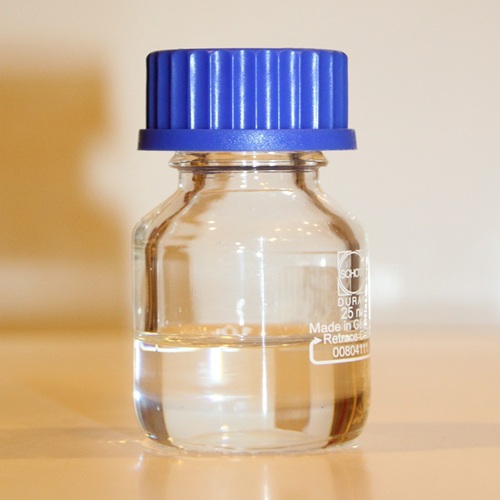
Clear light yellow or yellow oil
Chemical properties
Clear, light yellow-colored, oily liquid with a faint characteristic odor and slightly nutty, sweet taste resembling cooked sweet corn.
The Uses of CORN OIL
corn oil is used as a carrier oil, it has average emollient properties. Although not particularly prone to cause allergies, it is also not widely used in cosmetic formulations. It is considered somewhat comedogenic. Corn oil is obtained from the wet milling of corn.
The Uses of CORN OIL
Usually used in research applications as delivery vehicle for fat-soluble compounds including toxins.
The Uses of CORN OIL
Corn Oil is the oil obtained from the germ of the maize plant. the unsaturated fatty acids linoleic and oleic make up 80–85% of the total fatty acids. the tocopherols prevent the oil from oxidizing rapidly. it has a low melting point of 18°c to 10°c. it is used in mayonnaise, margarine, salad oil, and bakery products.
What are the applications of Application
Corn oil is used in research applications as delivery vehicle for fat-soluble compounds, including toxins.
Production Methods
Refined corn oil is obtained from the germ or embryo of Zea mays Linne(Fam.Gramineae),which contains nearly 50% of the fixed oil compared with 3.0–6.5% in the whole kernel. The oil is obtained from the embryo by expression and/or solvent extraction. Refining involves the removal of free fatty acids, phospholipids, and impurities; decolorizing with solid adsorbents; dewaxing by chilling; and deodorization at high temperature and under vacuum.
Definition
Extractives and their physically modified derivatives. It consists primarily of the glycerides of the fatty acids linoleic, oleic, palmitic and stearic.
General Description
Clear light yellow or yellow oily liquid. Faint taste. Faint odor.
Air & Water Reactions
Insoluble in water.
Reactivity Profile
On prolonged exposure to air, CORN OIL thickens and becomes rancid. CORN OIL is sensitive to light.
Fire Hazard
CORN OIL is combustible.
Agricultural Uses
Corn oil is an adjuvant used in herbicide sprays. It improves their function by improving wetting, reducing evaporation, increasing penetration and enhancing deposition and compatibility. Corn oil is not phyto-toxic; it is added for better penetration in plant leaves.
Pharmaceutical Applications
Corn oil is used primarily in pharmaceutical formulations as a solvent for intramuscular injections or as a vehicle for topical preparations. Emulsions containing up to 67% corn oil are also used as oral nutritional supplements; see also Section 18. When combined with surfactants and gel-forming polymers, it is used to formulate veterinary vaccines.
Corn oil has a long history of use as an edible oil and may be used in tablets or capsules for oral administration.
Safety Profile
Human skin irritant. An experimental teratogen. May be an allergen. Combustible liquid when exposed to heat or flame. Dangerous spontaneous heating may occur during storage if leaks impregnate rags, waste, etc. To fight fire, use Con, dry chemical.
Safety
Corn oil is generally regarded as a relatively nontoxic and nonirritant material with an extensive history of usage in food preparation.
Storage
Corn oil is stable when protected with nitrogen in tightly sealed bottles. Prolongedexposureto airleads tothickening and rancidity. Cornoilmaybesterilizedbydryheat,maintainingitat150°C for 1 hour.
Corn oil should be stored in an airtight, light-resistant container in a cool, dry place. Exposure to excessive heat should be avoided.
Incompatibilities
The photooxidation of corn oil is sensitized by cosmetic and druggrade samples of coated titanium oxide and zinc oxide.
Regulatory Status
Included in the FDA Inactive Ingredients Database (IM injections, oral capsules, suspensions, and tablets). Included in the Canadian List of Acceptable Non-medicinal Ingredients.
Properties of CORN OIL
| Density | 0.900 g/mL at 20 °C |
| refractive index | 1.473-1.476 |
| Flash point: | 254 °C |
| storage temp. | Sealed in dry,Room Temperature |
| solubility | Miscible with benzene, chloroform, dichloromethane, ether, hexane, and petroleum ether; practically insoluble in ethanol (95%) and water. |
| form | neat |
| form | Liquid |
| color | Pale Yellow |
| Odor | pale yel. oily liq., faint char. odor and taste |
| CAS DataBase Reference | 8001-30-7 |
| EPA Substance Registry System | Corn oil (8001-30-7) |
Safety information for CORN OIL
Computed Descriptors for CORN OIL
CORN OIL manufacturer
New Products
Indole Methyl Resin tert-butyl 9-methoxy-3-azaspiro[5.5]undecane-3-carboxylate Boc-His(Boc)-OH 2-CTC Resin 4-Chloro-7-tosy1-7Hpyrrolo[2,3-d]pyrimidine 5,7-Dibromo-1H-indole 2,5-dichloro-N-hydroxy-4,6-dimethylpyridine-3-carboximidamide 2,2-Dimethoxy-7-azaspiro[3.5]nonane hydrochloride 4-chloromethyl-5-methyl-1,3-dioxol-2-one (DMDO-Cl) R-2-BENZYLOXY PROPIONIC ACID 1,1’-CARBONYLDIIMIDAZOLE 1,1’-CARBONYLDI (1,2-4 TRIAZOLE) N-METHYL INDAZOLE-3-CARBOXYLIC ACID 4-((2-hydroxyethyl)thio)benzoic acid 1-(TERT-BUTOXYCARBONYL)-2-PYRROLIDINONE Methyl 6-methylnicotinate 3-Pyridineacrylic acid tert-Butyl carbazate TETRAHYDRO-2H-PYRAN-3-OL 2-((4-morpholinophenylamino) (methylthio) methylene) malononitrile 3-(4-morpholinophenylamino)-5-amino-1H-pyrazole-4-carbonitrile 2,4-dihydroxybenzaldehyde 1,3-Diethyl-1,3-Diphenylurea Methyl 2-methylquinoline-6-carboxylateRelated products of tetrahydrofuran


You may like
-
 8001-30-7 Corn oil 98%View Details
8001-30-7 -
Corn oil CAS 8001-30-7View Details
8001-30-7 -
Corn oil, equivalent to analytical standard CAS 8001-30-7View Details
8001-30-7 -
Corn oil, delivery vehicle for fat-soluble compounds CAS 8001-30-7View Details
8001-30-7 -
Corn oil CAS 8001-30-7View Details
8001-30-7 -
 Corn Oil, Packaging Size: 5 litreView Details
8001-30-7 -
 Pyridine 99.5% HPLC /UV SpectroscopyView Details
110-86-1 -
 Thiourea 99% ARView Details
62-56-6