
Bismaleimide
Synonym(s):Bismaleimide
- CAS NO.:13676-54-5
- Empirical Formula: C21H14N2O4
- Molecular Weight: 358.35
- MDL number: MFCD00005507
- EINECS: 237-163-4
- SAFETY DATA SHEET (SDS)
- Update Date: 2025-12-05 14:33:18
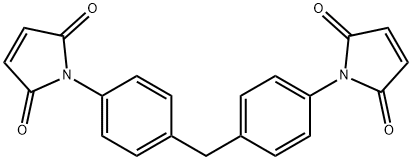
What is Bismaleimide?
Chemical properties
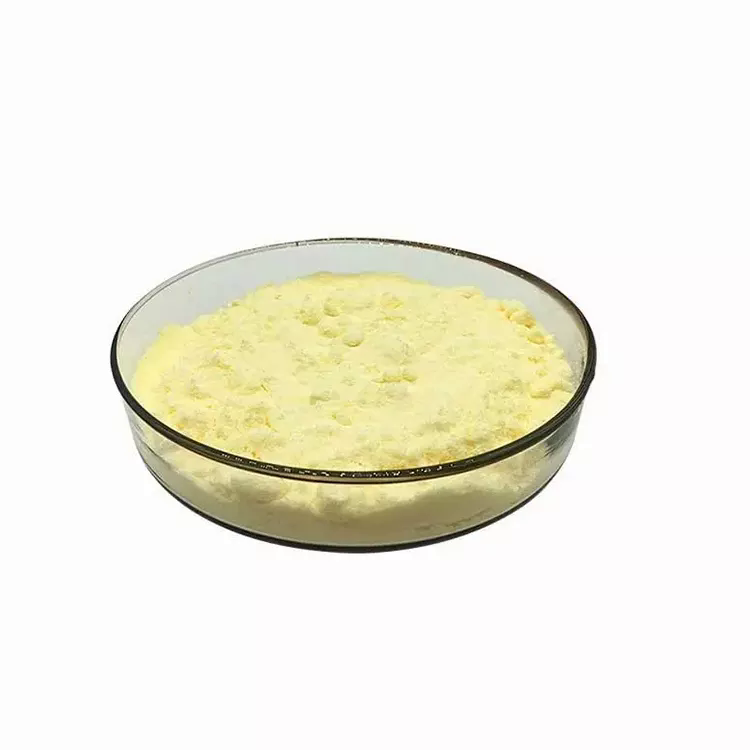
yellow to brownish fine crystalline powder
The Uses of Bismaleimide
Bismaleimide products can be used to make bismaleimide resins, modified phenolic resins, modified epoxy thermosetting resins such as heat resistance and PP, PVC, PBT, PMMA and other plastics, as well as high-grade rubber products.
The Uses of Bismaleimide
1,1′-(Methylenedi-4,1-phenylene)bismaleimide was used to cure glycidyl ester of eleostearic acid (GEEA).
General Description
The thermal and mechanical properties of GEEA cured by 1,1′-(methylenedi-4,1-phenylene)bismaleimide were studied.
Flammability and Explosibility
Not classified
Properties of Bismaleimide
| Melting point: | 156-158 °C(lit.) |
| Boiling point: | 490.79°C (rough estimate) |
| Density | 1.3360 (rough estimate) |
| vapor pressure | 0Pa at 25℃ |
| refractive index | 1.6800 (estimate) |
| storage temp. | Sealed in dry,Room Temperature |
| solubility | Water (Slightly) |
| pka | -0.40±0.20(Predicted) |
| form | powder to crystal |
| color | Light yellow to Amber to Dark green |
| Water Solubility | Insoluble in water. |
| BRN | 333986 |
| CAS DataBase Reference | 13676-54-5(CAS DataBase Reference) |
| NIST Chemistry Reference | p,p'-Bis(N-maleimidophenyl)methane(13676-54-5) |
| EPA Substance Registry System | 1H-Pyrrole-2,5-dione, 1,1'-(methylenedi-4,1-phenylene)bis- (13676-54-5) |
Safety information for Bismaleimide
| Signal word | Danger |
| Pictogram(s) |
 Skull and Crossbones Acute Toxicity GHS06 |
| GHS Hazard Statements |
H315:Skin corrosion/irritation H319:Serious eye damage/eye irritation H330:Acute toxicity,inhalation H335:Specific target organ toxicity, single exposure;Respiratory tract irritation |
| Precautionary Statement Codes |
P260:Do not breathe dust/fume/gas/mist/vapours/spray. P264:Wash hands thoroughly after handling. P264:Wash skin thouroughly after handling. P271:Use only outdoors or in a well-ventilated area. P302+P352:IF ON SKIN: wash with plenty of soap and water. P305+P351+P338:IF IN EYES: Rinse cautiously with water for several minutes. Remove contact lenses, if present and easy to do. Continuerinsing. |
Computed Descriptors for Bismaleimide
| InChIKey | XQUPVDVFXZDTLT-UHFFFAOYSA-N |
Bismaleimide manufacturer
New Products
4,4-Difluoropiperidine hydrochloride tert-butyl 9-methoxy-3-azaspiro[5.5]undecane-3-carboxylate Indole Methyl Resin N-Isopropylurea N,N-Dicyclohexylcarbodiimide(DCC) MELDRUMS ACID 5-METHYLISOXAZOLE-4-CARBOXYLIC ACID Magnessium Bis glycinate Zinc ascorbate 1-bromo-2-butyne 2-acetamidophenol 9(10H)-anthracenone Erythrosin B, 4-Piperidinopiperidine 2-((4-morpholinophenylamino) (methylthio) methylene) malononitrile 2,4-dihydroxybenzaldehyde 3-(4-morpholinophenylamino)-5-amino-1H-pyrazole-4-carbonitrile Methyl 2-methylquinoline-6-carboxylate 2,6-dichloro-4-nitropyridine 4-Bromo-2-chlorobenzonitrile 2-(benzylamino)acetic acid hydrochloride 4-(tert-Butoxycarbonylamino)but- 2-ynoic acid 3,4-dihydro-2H-benzo[b][1,4]dioxepine 1-Phenyl-1-cycloprppanecarboxylicacidRelated products of tetrahydrofuran
![N1,N1-DIETHYL-4-[4-(DIETHYLAMINO)BENZYL]ANILINE](https://img.chemicalbook.in/CAS/GIF/135-91-1.gif)

You may like
-
 13676-54-5 4,4'-Diphenylmethane bis-(maleimide) 98%View Details
13676-54-5 -
 13676-54-5 99%View Details
13676-54-5 -
 4,4'-Methylenebis(N-phenylmaleimide) CAS 13676-54-5View Details
13676-54-5 -
4,4'-Bismaleimidodiphenylmethane CAS 13676-54-5View Details
13676-54-5 -
1,1′-(Methylenedi-4,1-phenylene)bismaleimide CAS 13676-54-5View Details
13676-54-5 -
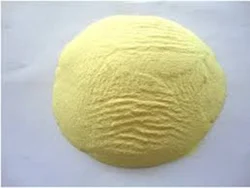 4,4'-DIPHENYLMETHANE BISMALEIMIDEView Details
13676-54-5 -
20677-73-0 (2,2-diethoxyethyl)methylamine 98%View Details
20677-73-0 -
3-(4-(hydroxyamino)-1-oxoisoindolin-2-yl)piperidine-2,6-dione 98%View Details
Statement: All products displayed on this website are only used for non medical purposes such as industrial applications or scientific research, and cannot be used for clinical diagnosis or treatment of humans or animals. They are not medicinal or edible.